
Best Credit Card for Dining 2026: Top Picks Ranked
Eating out adds up fast, and the right credit card can turn every restaurant bill into meaningful rewards. This guide ranks the best credit card for dining in 2026 across different budgets — whether you want the highest points rate, a no-annual-fee cash back option, or a card that also covers takeout and delivery.
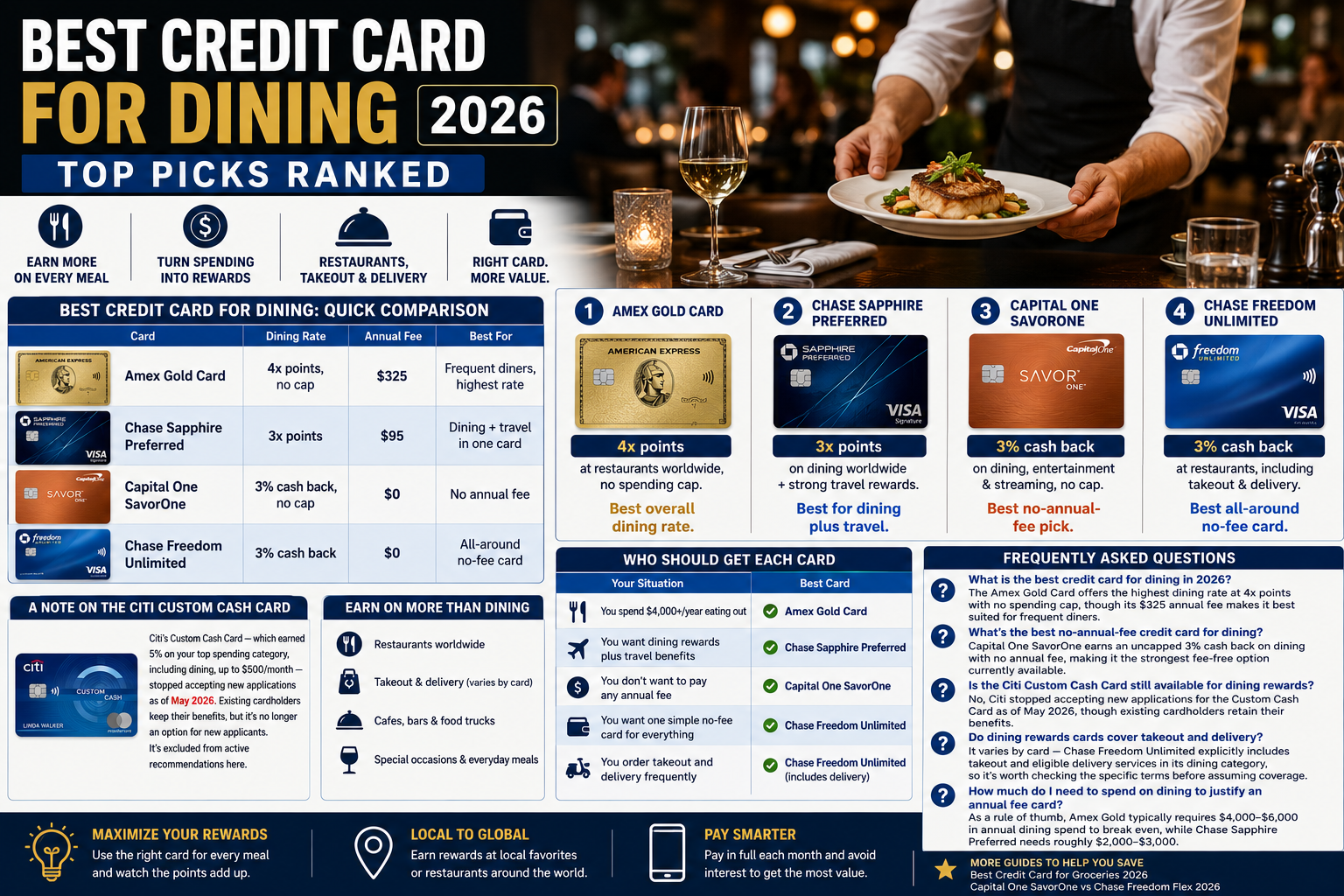
Best Credit Card for Dining: Quick Comparison
| Card | Dining Rate | Annual Fee | Best For |
|---|---|---|---|
| Amex Gold Card | 4x points, no cap | $325 | Frequent diners, highest rate |
| Chase Sapphire Preferred | 3x points | $95 | Dining + travel in one card |
| Capital One SavorOne | 3% cash back, no cap | $0 | No annual fee |
| Chase Freedom Unlimited | 3% cash back | $0 | All-around no-fee card |
1. Amex Gold Card — Best Overall Dining Rate
The Amex Gold earns 4x Membership Rewards points on restaurants worldwide, with no spending cap — the highest flat dining rate among widely available cards. Break-even math typically requires $4,000–$6,000 in annual dining spend to justify the $325 fee, though the card’s dining and Uber Cash credits can help offset it for frequent diners. For official terms, see American Express’s official Gold Card page.
2. Chase Sapphire Preferred — Best for Dining Plus Travel
At 3x points on dining worldwide plus a $95 annual fee, Sapphire Preferred needs only $2,000–$3,000 in annual dining spend to break even. It bundles in strong travel bonus categories too, making it a natural pick if you want one card to cover both restaurants and trips.

3. Capital One SavorOne — Best No-Annual-Fee Pick
SavorOne earns an uncapped 3% cash back on dining with no annual fee, plus the same rate on entertainment and popular streaming services. If you don’t spend enough to justify a fee-based card, this is the strongest fee-free alternative.
4. Chase Freedom Unlimited — Best All-Around No-Fee Card
Freedom Unlimited earns 3% cash back at restaurants (including takeout and delivery) plus 1.5% on everything else — one of the few no-fee cards that pays above the standard 1% base rate across the board, not just at restaurants.
A Note on the Citi Custom Cash Card
Citi’s Custom Cash Card — which earned 5% on your top spending category, including dining, up to $500/month — stopped accepting new applications as of May 2026. Existing cardholders keep their benefits, but it’s no longer an option for new applicants, so it’s excluded from active recommendations here.
Who Should Get Each Card
| Your Situation | Best Card |
|---|---|
| You spend $4,000+/year eating out | ✅ Amex Gold Card |
| You want dining rewards plus travel benefits | ✅ Chase Sapphire Preferred |
| You don’t want to pay any annual fee | ✅ Capital One SavorOne |
| You want one simple no-fee card for everything | ✅ Chase Freedom Unlimited |
| You order takeout and delivery frequently | ✅ Chase Freedom Unlimited (includes delivery) |
If groceries matter as much as restaurants to your budget, check our Best Credit Card for Groceries guide, or compare two popular dining-focused cards directly in our Capital One SavorOne vs Chase Freedom Flex comparison.
Frequently Asked Questions
What is the best credit card for dining in 2026?
The Amex Gold Card offers the highest dining rate at 4x points with no spending cap, though its $325 annual fee makes it best suited for frequent diners.
What’s the best no-annual-fee credit card for dining?
Capital One SavorOne earns an uncapped 3% cash back on dining with no annual fee, making it the strongest fee-free option currently available.
Is the Citi Custom Cash Card still available for dining rewards?
No, Citi stopped accepting new applications for the Custom Cash Card as of May 2026, though existing cardholders retain their benefits.
Do dining rewards cards cover takeout and delivery?
It varies by card — Chase Freedom Unlimited explicitly includes takeout and eligible delivery services in its dining category, so it’s worth checking the specific terms before assuming coverage.
How much do I need to spend on dining to justify an annual fee card?
As a rule of thumb, Amex Gold typically requires $4,000–$6,000 in annual dining spend to break even, while Chase Sapphire Preferred needs roughly $2,000–$3,000.
Disclaimer: This article is for informational purposes only and does not constitute financial advice. Card terms, fees, and rewards are subject to change by the issuer; always verify current rates and fees directly with the card issuer before applying. We may earn a commission from partner links, which does not affect the objectivity of our reviews.