
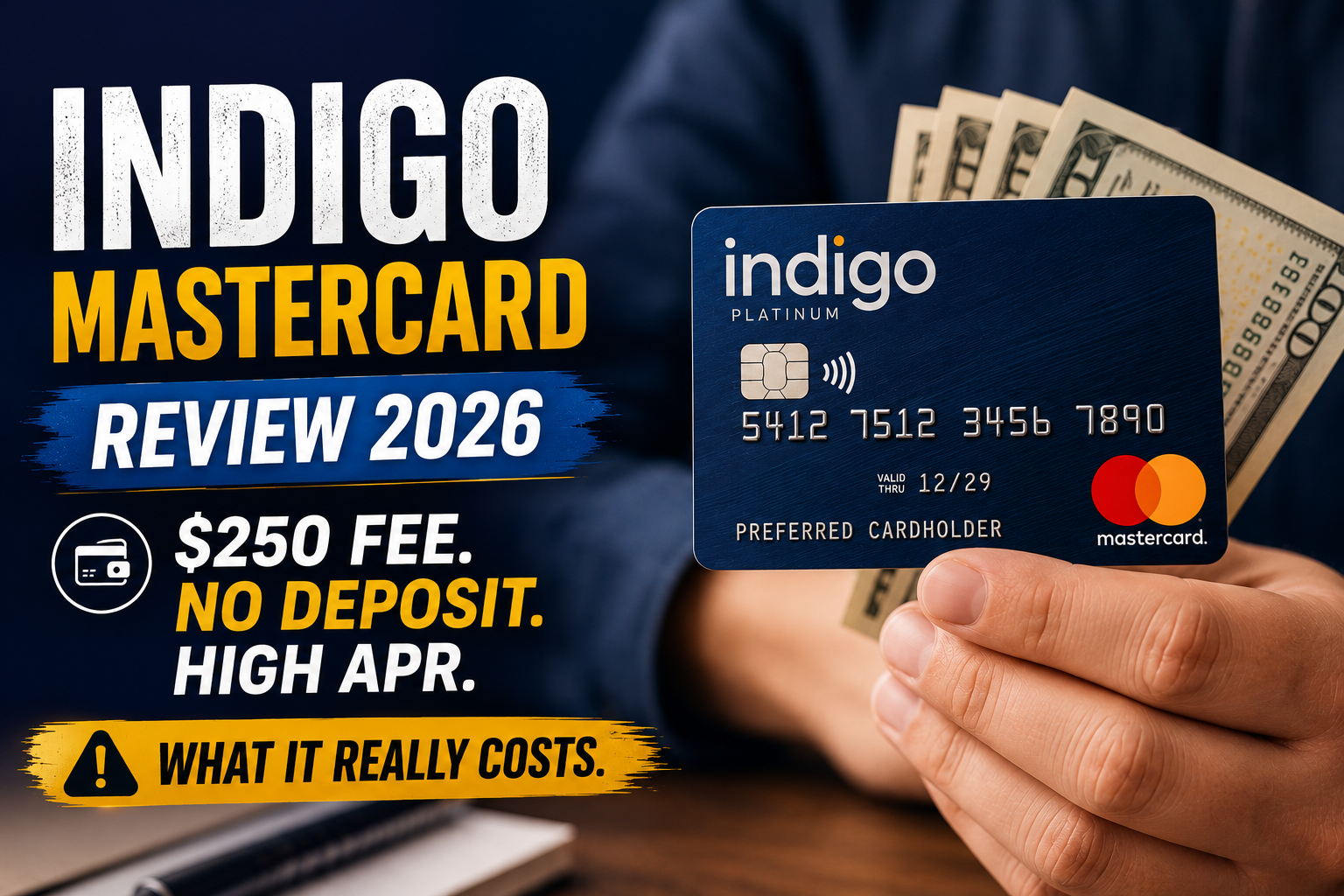

Indigo Mastercard Review 2026: $250 Fee, No Deposit, High APR
The Indigo Mastercard is an unsecured credit card for people with bad or limited credit, issued by Celtic Bank and serviced by Concora Credit. It charges a $250 annual fee the first year, $99 after that, plus a $19.25 monthly fee starting in year two, with a fixed APR of 35.9% and no rewards program. Whether that’s worth it depends entirely on what your other options actually are — here’s the full breakdown before you apply.
Indigo Mastercard: Key Details at a Glance
| Feature | Details |
|---|---|
| Issuer | Celtic Bank, serviced by Concora Credit |
| Annual Fee | $250 the first year; $99 thereafter |
| Monthly Fee | $0 the first year; $19.25/month starting year two (~$231/year) |
| Regular APR | 35.9% (fixed) |
| Credit Limit | Typically starts at $300 (no security deposit required) |
| Foreign Transaction Fee | 1% |
| Rewards | None |
| Credit Bureaus Reported To | Experian, Equifax, TransUnion |
You can check your pre-qualification odds directly on the issuer’s site: Indigo Mastercard official website.

How the Indigo Mastercard Actually Works
The Indigo Mastercard is issued by Celtic Bank, a Utah-chartered, FDIC-insured industrial bank, and serviced by Concora Credit — the same company behind the Milestone Mastercard. Both cards share a nearly identical structure: no security deposit, unsecured credit access for people with bad or limited credit, and monthly reporting to all three major credit bureaus.
Where Indigo stands out — and not in a good way — is cost. According to WalletHub, the $700 credit limit on higher-tier Indigo offers is effectively reduced to about $525 once the first-year annual fee is deducted at account opening.
On the more common $300 starting limit, a $250 first-year fee eats the majority of your available credit before you make a single purchase. U.S. News confirms the card carries a 35.9% APR with no introductory 0% offer on purchases or balance transfers, so it’s best to avoid carrying a balance month to month.
From year two onward, the annual fee drops to $99, but a new $19.25 monthly fee begins, adding roughly $231 a year. Combined, that’s close to $330 in total fees during year two alone — one of the more expensive fee structures in the subprime card category, according to Money Atlas’s comparison of unsecured credit-building cards.
There’s no rewards program of any kind, and credit limit increases aren’t automatic; you typically need to call and request a review after at least six months of on-time payments.
Pros and Cons
Pros
- No security deposit required
- Reports to all three major credit bureaus
- Soft-pull pre-qualification available before applying
- Higher approval odds than mainstream cards for bad credit
- Includes Mastercard Zero Liability and ID theft protection
Cons
- $250 first-year fee is among the highest in its category
- Ongoing monthly fee starting in year two (~$231/year)
- Very high 35.9% fixed APR
- No rewards or cash back
- Credit limit increases are not automatic
Who Should Get This Card
| Good Fit If You… | Not a Good Fit If You… |
|---|---|
| Have been turned down for mainstream unsecured cards | Can qualify for a lower-fee alternative like Milestone |
| Can pay your balance in full every month | Tend to carry a balance month to month |
| Don’t have funds for a security deposit | Could save up for a secured card with lower fees instead |
| Plan to use it short-term (6-12 months) before upgrading | Want a card with any kind of rewards |
Before applying, it’s worth comparing this offer directly against our Milestone Credit Card Review, since both cards are serviced by the same company but Milestone typically carries a lower annual fee and monthly cost. If cash back matters more to you than a low starting fee, our Aspire Credit Card Review covers one of the few unsecured bad-credit cards that actually pays rewards.
Frequently Asked Questions
Is this card legitimate?
Yes. It’s issued by Celtic Bank, an FDIC-insured industrial bank, and it’s a real Mastercard that reports to all three credit bureaus. Complaints about the card typically concern its high fees, not fraud.
Does it require a security deposit?
No. It’s an unsecured card, so you don’t need to put down a deposit to open the account.
How much does it cost in total during year two?
Around $330 in fees alone — a $99 annual fee plus roughly $231 in monthly fees ($19.25 x 12), separate from any interest charges if you carry a balance.
Is Indigo or Milestone better for rebuilding credit?
Milestone generally carries a lower annual fee ($175 vs. $250 in year one) and a lower ongoing monthly cost, making it the cheaper option for most applicants. Indigo may still make sense if you’re offered better pre-qualification terms specific to your credit profile.
Can I get a credit limit increase later on?
Increases aren’t automatic. You typically need to contact customer service after at least six months of on-time payments to request a review.
Disclaimer: This review is for informational purposes only and does not constitute financial advice. Card terms, fees, and APRs are subject to change by the issuer and vary by applicant; always confirm current details directly with Celtic Bank or Concora Credit before applying. Best Card Guide may earn a commission from some of the links on this page.